Topical Steroid Withdrawal: Symptoms, Phases, Diagnosis, Treatment and Prevention
Topical corticosteroids have an important place in the treatment of many inflammatory skin conditions. They can reduce inflammation, itching and discomfort and, when appropriately prescribed and used, can be valuable medicines.
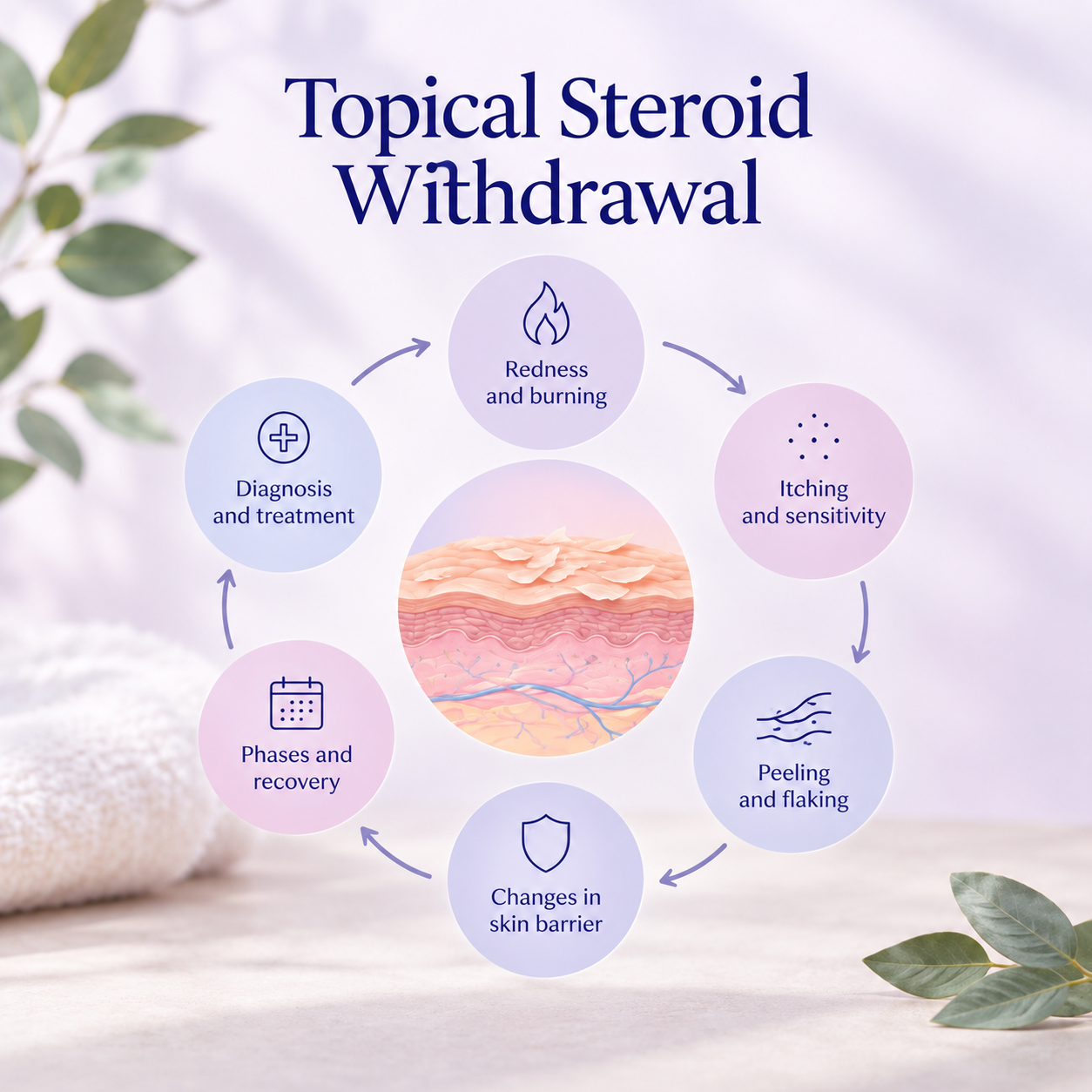
However, some people report significant skin changes after reducing or stopping topical corticosteroids, particularly following prolonged or frequent use. This phenomenon is known as topical steroid withdrawal (TSW).
TSW remains an evolving area of research. The condition does not yet have universally accepted diagnostic criteria, and researchers are still working to understand exactly why it develops, which people are most susceptible and how recovery progresses.
A 2025 review describes TSW as involving symptoms such as redness, burning, itching, pain, peeling and cracking, while also emphasising the limited amount of research available.
A 2026 international modified Delphi study has since proposed preliminary diagnostic criteria for one subtype of TSW, reflecting the growing effort to establish a clearer clinical definition.
This article explains what is currently understood about TSW, what symptoms may occur, how it can differ from an underlying skin condition and why a whole-person approach may be useful when supporting someone with persistent skin symptoms.
1. What Is Topical Steroid Withdrawal?
Topical steroid withdrawal refers to a collection of skin symptoms that may occur after reducing or stopping topical corticosteroids.
It is sometimes described as topical steroid withdrawal syndrome (TSWS) or red skin syndrome.
The term topical steroid addiction is also used in the literature, although terminology remains inconsistent.
One important distinction is that TSW is not simply "eczema coming back".
In some reported cases, the skin after withdrawal becomes more extensive, more painful or develops a different appearance from the original skin condition.
At the same time, eczema and other inflammatory skin conditions can flare after corticosteroids are reduced. This means that careful assessment is essential.
2. Why Can TSW Develop?
The exact mechanism remains uncertain.
Current research suggests that TSW is likely to involve several interacting processes rather than one single cause.
These proposed mechanisms include:
changes in local steroid signalling
changes in glucocorticoid receptor activity
rebound changes in blood-vessel dilation
impaired skin-barrier function
changes in inflammatory cytokines
effects on keratinocytes and fibroblasts
changes in the skin microbiome
altered immune regulation
The 2025 review by Maskey and colleagues discusses several of these mechanisms, including local cortisol regulation, skin atrophy, barrier changes, immune suppression, follicular effects, glucocorticoid receptors and inflammatory signalling.
Another review similarly describes rebound vasodilation, glucocorticoid receptor changes and impaired skin-barrier function as plausible mechanisms, while emphasising that the evidence remains incomplete.
This distinction is important.
These mechanisms are proposed explanations, not proof that every person with TSW experiences the same biological process.
3. The Skin Barrier
The outer layer of the skin provides an important protective barrier.
It helps:
retain water
protect against environmental irritants
limit unwanted penetration of substances
support the skin's microbial environment
interact with the immune system
When the skin barrier is impaired, transepidermal water loss can increase, and the skin may become dry, sensitive and more reactive.
Prolonged topical corticosteroid exposure can influence skin structure and barrier function, particularly when potent preparations are used inappropriately or for prolonged periods.
This is one reason why restoring and protecting the skin barrier is an important part of supportive skin care.
4. The Immune System and Cortisol
The immune system is constantly active within the skin.
Cells such as keratinocytes, dendritic cells and other immune cells communicate with each other to detect and respond to changes in the skin's environment.
Inflammatory skin conditions involve complex networks of signalling molecules known as cytokines.
Topical corticosteroids work partly by reducing inflammatory signalling.
The body also has its own glucocorticoid system. Cortisol is produced primarily by the adrenal glands and regulated through the HPA axis. The skin also has local steroid-producing pathways.
This is where terminology can become confusing.
TSW should not simply be described as the adrenal glands "switching off". Systemic suppression of the HPA axis is a different potential consequence of corticosteroid exposure.
Research into TSW is particularly interested in changes in local steroid signalling within the skin and what happens to inflammatory regulation after topical corticosteroids are withdrawn.
5. Common Symptoms of TSW
Symptoms can vary significantly.
Reported symptoms include:
Skin symptoms
intense redness
burning
stinging
itching
swelling
peeling
flaking
cracking
oozing
increased sensitivity
changes in skin texture
warmth
Sensory symptoms
For some people, the burning or sensitivity can be particularly distressing.
Skin that previously tolerated ordinary products may suddenly react to them.
Whole-person effects
Severe itching and discomfort can interfere with sleep and everyday activities.
This can create a cycle in which poor sleep and ongoing stress make an already difficult period even harder to manage.
A recent systematic review found that burning, itching, skin hypersensitivity, erythema and desquamation were among the most commonly reported features in the limited studies available. Importantly, the evidence base was small and predominantly descriptive.
6. Phases and Patterns of TSW
There is no universally accepted sequence of TSW phases.
Some published descriptions have proposed an acute red or exudative phase followed by periods of dryness, peeling and changes in skin texture.
However, I would be cautious about expecting everyone to follow the same pattern.
One person may experience:
redness → burning → oozing → dryness → gradual improvement
while another may experience:
redness → dryness → flare → improvement → another setback
Recovery may not be linear.
A difficult week does not necessarily mean that healing has stopped, and a period of improvement does not necessarily mean that the process is finished.
7. TSW or an Eczema Flare?
This is one of the most important questions.
Someone who stops a topical corticosteroid may experience a recurrence of the condition for which the steroid was originally prescribed.
For example, eczema can flare when treatment is reduced.
TSW may also produce redness, itching, scaling and inflammation.
Other conditions can create similar symptoms, including:
allergic contact dermatitis
irritant dermatitis
rosacea
infection
psoriasis
seborrhoeic dermatitis
steroid-induced rosacea-like reactions
The 2025 review specifically notes that TSW can be confused with an underlying condition or contact allergy.
This is why the history matters.
I want to know what the skin looked like before topical steroid treatment, what was used, where it was used, how frequently it was applied and what happened when treatment was reduced.
8. How Is TSW Diagnosed?
There is currently no single laboratory test that confirms TSW.
Assessment is based largely on:
clinical history
previous skin diagnosis
topical corticosteroid history
potency and duration of use
distribution of symptoms
changes after reducing or stopping treatment
appearance and sensation of the skin
consideration of alternative diagnoses
In 2026, Hsu and colleagues published preliminary diagnostic criteria for the erythemato-oedematous subtype following a modified Delphi process involving clinicians with expertise in the area. The authors highlighted the lack of well-defined diagnostic criteria and the limited understanding of the underlying mechanisms.
This is an important step in research, but the criteria are described as preliminary, not as a universally established diagnostic test.
9. Medical Management and Support
There is currently no single universally accepted treatment protocol for TSW.
Management needs to be individualised.
Depending on the person's presentation, medical care may involve:
assessment for infection
assessment of the original skin condition
appropriate skin-barrier support
symptom management
management of sleep disturbance
psychological support where needed
monitoring of changes over time
medical review where symptoms are severe or unusual
Some published literature discusses tapering topical corticosteroids, while treatment decisions need to be individualised according to the person's medical history and the condition being treated.
If someone is currently using prescribed corticosteroids, they should discuss changes in treatment with their prescribing clinician rather than stopping medication solely because they are concerned about TSW.
10. Prevention
Prevention starts with appropriate use of topical corticosteroids.
This means:
using the appropriate preparation for the condition
applying it as directed
using the appropriate amount
avoiding unnecessary prolonged use
reviewing treatment when symptoms persist
seeking reassessment when treatment is no longer working as expected
Topical corticosteroids are not inherently "bad" medicines. They have an established role in managing inflammatory skin disease.
The aim is appropriate, informed use rather than fear.
11. Recovery and Psychological Impact
The uncertainty surrounding TSW can be one of the most difficult aspects of the experience.
When symptoms are severe, people may feel frustrated, isolated or anxious about their skin.
Sleep disruption can add another layer of difficulty.
For this reason, supporting someone with TSW should involve more than simply looking at the skin.
Skin health, sleep, stress, nutrition, daily routines and emotional wellbeing can all be relevant parts of the overall picture.
Recovery is individual.
There is currently no reliable way to predict exactly how long symptoms will last for a particular person.
12. The Gut–Skin Connection
The skin and gut are both important interfaces between the body and the external environment.
Research into the gut–skin axis suggests that the gut microbiome, intestinal barrier, skin microbiome, skin barrier and immune system communicate through complex immune, metabolic and other signalling pathways.
Much of the current evidence relates to atopic dermatitis rather than TSW itself.
Research in atopic dermatitis has identified associations between gut microbial changes, barrier function and immune regulation. The 2026 review by Peng and colleagues describes this as a complex and bidirectional relationship rather than a simple "gut problem causes skin problem" pathway.
This distinction matters.
There is currently not enough evidence to say that "leaky gut" causes TSW.
However, the relationship between gut health, barrier function and immune regulation is interesting and potentially relevant when considering the wider health of someone with chronic inflammatory skin problems.
13. My Whole-Person Approach
When I work with someone experiencing chronic skin symptoms, I want to understand the story behind the skin.
This can include looking at:
the original skin condition
previous treatments
changes in symptoms
skin-barrier health
digestive health
diet
nutritional status
stress
sleep
environmental exposures
lifestyle
individual triggers
I am particularly interested in identifying the underlying factors that may be contributing to ongoing skin dysfunction.
That does not mean there is always one "root cause".
Skin conditions are often multifactorial, and the combination of contributing factors can be different for every person.
14. When to Seek Medical Attention
Medical assessment is important if you experience:
rapidly worsening symptoms
significant swelling
extensive oozing or crusting
increasing pain
fever
feeling generally unwell
suspected infection
eye involvement
facial swelling
breathing difficulties
symptoms suggesting a significant allergic reaction
symptoms suggesting adrenal insufficiency or another systemic problem
Severe symptoms should not automatically be assumed to be TSW.
Conclusion
Topical steroid withdrawal is a complex and still developing area of skin-health research.
The current evidence suggests that several processes may be involved, including changes in skin-barrier function, local steroid signalling, blood-vessel regulation, immune activity and inflammatory pathways.
At the same time, much remains unknown.
For anyone experiencing significant skin changes after reducing or stopping topical corticosteroids, careful assessment is important to distinguish TSW from an underlying skin condition, infection, contact dermatitis or another cause.
My approach is to look beyond the visible symptoms and consider the skin, barrier function, immune system, lifestyle and other individual factors that may be contributing to ongoing skin dysfunction.
References
Maskey A, Sasaki A, Sargen M, et al. (2025). Breaking the cycle: a comprehensive exploration of topical steroid addiction and withdrawal. Frontiers in Allergy.Tan, SY, Chandran, NS & Choi, EC-E 2021, ‘Steroid Phobia: Is There a Basis? A Review of Topical Steroid Safety, Addiction and Withdrawal’, Clinical Drug Investigation, vol. 41, no. 10, pp. 835–842.Hsu C, Guo L, Adams D, et al. (2026). Topical steroid withdrawal syndrome: developing diagnostic criteria through a modified Delphi method. British Journal of Dermatology, 194(4), 768–778.Peng R, Huang X, Bao Y, et al. (2026). Atopic dermatitis and the gut-skin axis: a review from dysbiosis to novel targeted therapeutic strategies. Frontiers in Immunology.