The Gut–Skin Connection: Gut Health, Leaky Gut, Dysbiosis and Skin Health
The skin and gut may seem like completely separate parts of the body, but they share something important: both are major interfaces between our internal environment and the outside world.
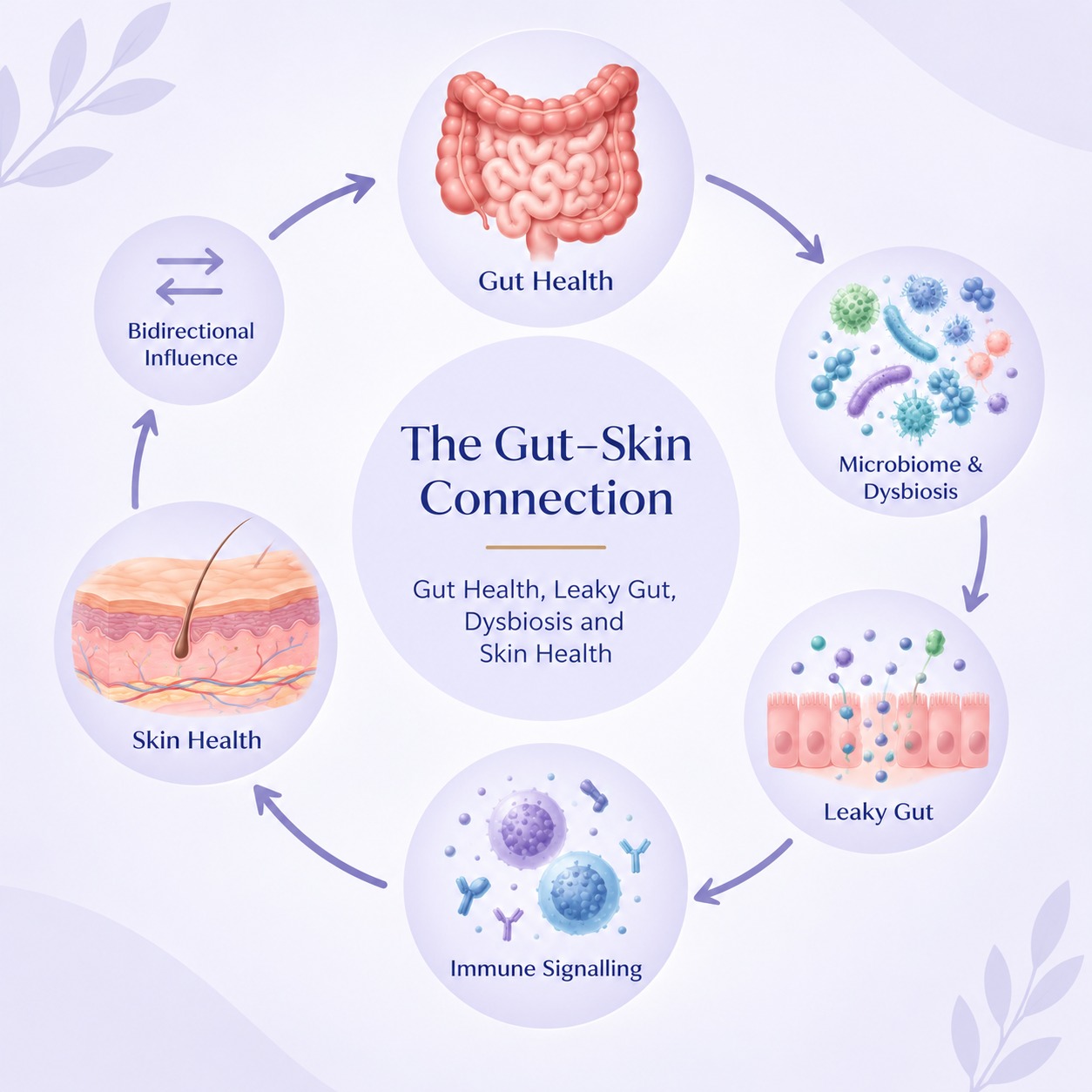
The skin forms a physical barrier around the body, while the gastrointestinal tract controls what enters and leaves the internal environment through the intestinal barrier.
Both are also closely connected with the immune system.
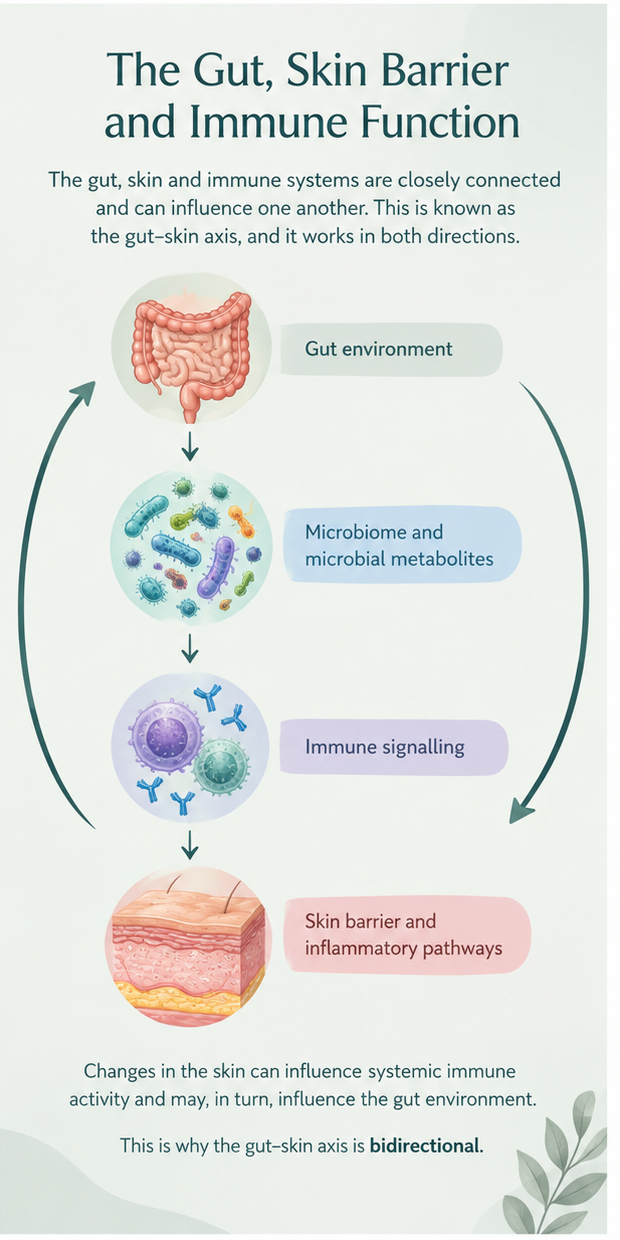
Research into these relationships has led to increasing interest in the gut–skin axis — the network of communication between the gut, gut microbiome, immune system and skin.
The relationship is complex and bidirectional. It is not simply a case of "poor gut health causes bad skin".
What Is the Gut–Skin Axis?
The gut–skin axis describes communication between the gastrointestinal system and the skin through several pathways, including:
immune signalling
microbial metabolites
metabolic pathways
endocrine signalling
nervous-system communication
barrier function
The gut microbiome produces substances that can influence immune and metabolic activity, while immune signals and other systemic factors can also influence the skin.
A 2026 review describes the gut–skin axis as a bidirectional communication network involving neural, endocrine, immune and metabolic signalling.
This is one reason I believe it can be useful to consider the whole person when assessing persistent skin problems.
The Skin Barrier
Healthy skin is more than a covering.
The outermost layer of the skin helps prevent excessive water loss and provides protection from environmental irritants, allergens and microorganisms.
When the skin barrier is impaired, the skin can become:
dry
sensitive
itchy
reactive
more vulnerable to irritation
The term "leaky skin" is sometimes used in patient education to describe this type of impaired barrier function.
In scientific terms, researchers are more likely to discuss skin-barrier dysfunction, increased permeability or increased transepidermal water loss.
What Is "Leaky Gut"?
"Leaky gut" is a popular term.
In scientific literature, the concept is generally discussed as increased intestinal permeability or impaired intestinal barrier function.
The intestinal barrier is not simply a wall.
It is a dynamic system involving:
intestinal epithelial cells
tight junctions
mucus
immune cells
the gut microbiome
microbial metabolites
Its role is to allow appropriate nutrients and substances to pass through while helping prevent unwanted substances from crossing into the body.
Research is investigating how changes in this barrier may interact with immune regulation and inflammatory conditions.
However, it is important not to turn an area of research into a universal explanation for chronic disease.
What Is Dysbiosis?
The human body contains complex microbial communities.
The gut microbiome contains enormous numbers of microorganisms that interact with the body and with one another.
Dysbiosis is a broad term used to describe changes or disturbances in the composition or function of a microbial community.
In studies of atopic dermatitis, researchers have identified differences in gut microbial composition and diversity in some populations.
However, dysbiosis does not necessarily mean that a person has one specific "bad bacteria" that needs to be removed.
The microbiome is an ecosystem.
The important question is often how the overall community is functioning and interacting with the host.
Gut Health and the Immune System
A large proportion of the body's immune activity is associated with the gastrointestinal tract.
The gut microbiome interacts with immune cells and can influence immune regulation through microbial metabolites and other signalling pathways.
Research into atopic dermatitis has particularly focused on the relationship between gut microbiota, intestinal barrier integrity and immune regulation.
The 2026 review literature describes altered gut microbiota, reduced microbial diversity in some AD populations and changes in microbial metabolites such as short-chain fatty acids as areas of active research.
This does not mean that every person with eczema has gut dysbiosis, nor does it mean that correcting the microbiome will automatically resolve a skin condition.
It means that the gut–skin relationship is an important area for continued research.
The Skin Microbiome
The gut is not the only place where microorganisms matter.
The skin has its own microbiome.
Healthy skin supports a diverse community of microorganisms that interact with the skin environment and immune system.
When the skin barrier becomes disrupted, the microbial environment can also change.
In atopic dermatitis, for example, research has identified reduced microbial diversity and increased colonisation with Staphylococcus aureus during flares.
This creates an interesting relationship: barrier dysfunction can influence the microbiome, while microbial changes can further influence inflammation and barrier function.
The relationship may therefore become self-reinforcing.
What About Diet?
Diet is one of the factors I consider when appropriate.
Food provides:
protein
essential fatty acids
vitamins
minerals
fibre
plant compounds
substrates for microbial metabolism
Diet can also influence the gut microbiome.
However, there is no single "skin diet" that works for everyone.
Removing large numbers of foods without a clear reason can sometimes create unnecessary restriction and nutritional gaps.
My preference is to look at the individual person's diet, symptoms, nutritional requirements and history rather than automatically prescribing a long list of foods to avoid.
Stress, Sleep and the Gut–Skin Connection
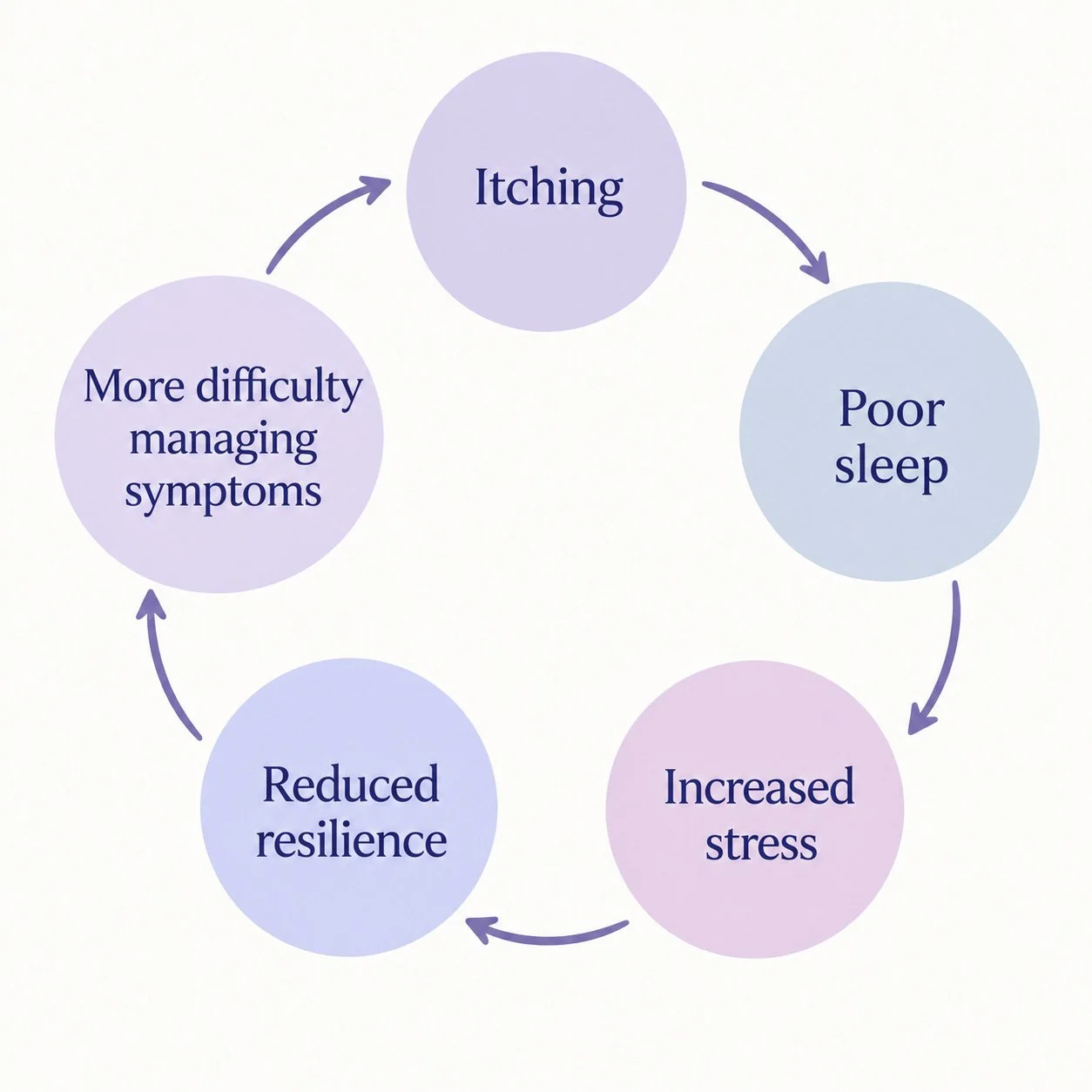
The gut–skin relationship does not operate independently of the nervous system.
Stress and sleep can influence immune regulation, digestion, behaviour and skin symptoms.
When someone has an uncomfortable skin condition, the relationship can become circular:
This does not mean that stress is "causing" the skin condition.
It means that stress and sleep can be part of the wider environment in which the skin is trying to recover.
Is Leaky Gut the Root Cause of Skin Problems?
This is where caution is important.
There is growing research into intestinal permeability, gut microbiota, immune regulation and skin disease.
But it would be inaccurate to say that "leaky gut is the root cause" of eczema, psoriasis, rosacea or TSW.
These conditions are multifactorial.
Genetics, immune activity, skin-barrier function, environmental exposure, microbiota, lifestyle and other factors can all interact.
The current evidence is strongest for specific conditions and mechanisms rather than a universal gut explanation for all skin disease.
How I Look at Gut Health
When I assess someone with persistent skin symptoms, I may consider:
Digestive health
bloating
bowel regularity
reflux
digestive discomfort
food tolerance
previous gastrointestinal problems
Diet
overall dietary quality
variety
fibre intake
protein
essential fats
nutrient density
unnecessary restriction
Lifestyle
sleep
stress
exercise
alcohol intake
environmental exposures
Skin health
barrier function
skincare products
inflammation
previous treatments
recurrent patterns
environmental triggers
The purpose is not to find one explanation.
It is to build a picture of what may be influencing the person's health.
Looking Beyond the Skin
This is an important part of my approach.
If someone has had persistent skin symptoms for years, simply asking:
"What cream should I use?"
may not be enough.
I also want to understand:
Why does this person's skin keep becoming inflamed?
What happens before a flare?
What is happening with their skin barrier?
Are there digestive or dietary factors worth considering?
How are they sleeping?
What environmental factors might be relevant?
What treatments have they already tried?
This does not mean every answer will be found outside the skin.
Sometimes the skin really is the primary problem.
The aim is to identify the individual factors that may be contributing to ongoing skin dysfunction.
Supporting the Whole System
Supporting skin health can therefore involve much more than topical skincare.
Depending on the individual, the focus may include:
supporting the skin barrier
improving dietary quality
identifying nutritional gaps
supporting digestive health
considering relevant food patterns
improving sleep
managing lifestyle factors
reducing unnecessary irritant exposure
identifying individual triggers
monitoring changes over time
The approach needs to be individualised.
The Take-Home Message
The gut–skin axis is an exciting area of research.
The gut, skin, microbiome, immune system and nervous system do not operate as completely separate systems.
At the same time, we need to be careful not to oversimplify the science.
"Leaky gut" is not a universal explanation for skin disease, and dysbiosis is not automatically the cause of someone's symptoms.
Instead, the evidence supports a more nuanced view:
the health of the gut, skin barrier, microbiome and immune system can interact. Understanding those relationships may help us better understand persistent skin problems.
That is why my approach is to look beyond the visible symptoms and consider the wider factors that may be contributing to ongoing skin dysfunction.
Reference:
Peng R, Huang X, Bao Y, et al. (2026). Atopic dermatitis and the gut-skin axis: a review from dysbiosis to novel targeted therapeutic strategies. Frontiers in Immunology.