Histamine Intolerance & Skin Conditions | Psoriasis, Eczema & Rosacea | Gosford
Could histamine be contributing to itchy, red or reactive skin?
Learn about histamine intolerance, skin symptoms, food triggers and a personalised approach to psoriasis, eczema and rosacea.
If you experience persistent itching, flushing, hives, unexplained rashes or skin flare-ups, particularly alongside digestive symptoms, headaches, nasal congestion or food sensitivities, it may be worth looking at the bigger picture.
Histamine is a naturally occurring compound that plays an important role in the immune system, digestion and nervous system. It is also one of the chemicals released by mast cells during an inflammatory or allergic response.
For some people, symptoms may occur when the amount of histamine they are exposed to exceeds their body's ability to break it down effectively. This is commonly referred to as histamine intolerance.
Histamine intolerance is a complex and still-evolving area of health research. There is currently no single validated test that can definitively diagnose it, so assessment generally involves looking at the overall pattern of symptoms, excluding other possible causes and observing whether symptoms improve with appropriate dietary changes and subsequent food reintroduction.
At the Psoriasis & Skin Clinic Gosford, I look beyond the skin to understand what may be triggering or exacerbating your symptoms.
What is histamine?
Histamine is a chemical messenger that is naturally produced by the body. It has several important roles, including helping regulate immune responses, stomach acid and communication within the nervous system.
Histamine is also found in varying amounts in foods. Fermentation, ageing, processing and storage can increase histamine levels in some foods.
Normally, the body has mechanisms for breaking down histamine. Diamine oxidase (DAO) is an important enzyme involved in breaking down histamine from food within the digestive tract. Another enzyme, histamine-N-methyltransferase (HNMT), helps metabolise histamine within tissues.
When histamine breakdown does not keep pace with exposure, some people may experience a collection of symptoms that can resemble an allergy or food sensitivity.
It is important to remember that histamine itself is not harmful. It is an essential part of normal body function. The issue is how an individual's body responds to and processes histamine.
How can histamine affect the skin?
Histamine is particularly relevant to skin health because mast cells are abundant within the skin.
When histamine is released, it can influence blood vessels and nerve endings, contributing to itching, redness, warmth and swelling.
For someone already experiencing an inflammatory skin condition, these effects may make existing symptoms feel more noticeable or difficult to manage.
1. Itching
Histamine is one of the chemicals involved in the sensation of itch.
If you experience persistent itching without an obvious explanation, histamine may be one of several factors worth considering.
For people with eczema or psoriasis, itching can become particularly troublesome because scratching can further irritate and damage the skin barrier.
2. Hives and raised rashes
Histamine can cause blood vessels to dilate and become more permeable. This can result in raised, itchy areas of skin known as urticaria or hives.
Hives can appear suddenly and may change location or disappear within a relatively short period.
3. Flushing and facial redness
Some people experience warmth, redness or flushing of the face, neck or upper chest following exposure to particular foods, alcohol, heat, stress or other triggers.
Histamine is one possible contributor to this response.
This can be particularly relevant when assessing people who experience rosacea or recurrent facial flushing.
4. Skin inflammation
Histamine interacts with a number of inflammatory pathways. This means that, in some people, histamine-related reactions may add to the overall inflammatory burden affecting the skin.
However, histamine intolerance does not mean that histamine is the underlying cause of psoriasis, eczema, rosacea or acne.
These conditions are complex and have multiple contributing factors.
Histamine intolerance and psoriasis, eczema and rosacea
If you have a chronic skin condition, it can sometimes be useful to look beyond the skin itself.
At my clinic, I consider potential triggers such as:
Diet
Digestive health
Hormonal changes
Stress
Lifestyle
Environmental factors
Medications and supplements
Food sensitivities
Inflammatory processes
Histamine may be one piece of this picture.
-
Psoriasis is a complex inflammatory condition involving the immune system, genetics and multiple environmental and lifestyle factors.
Histamine and mast cells are involved in inflammatory processes within the skin, but this does not mean that histamine intolerance causes psoriasis.
For some people, however, identifying factors that appear to aggravate itching or inflammation may form part of a broader approach to managing their symptoms.
-
Eczema is commonly associated with significant itching and disruption of the skin barrier.
Because histamine is involved in itch signalling and immune responses, it may contribute to symptoms in some individuals. However, eczema has many possible triggers, and histamine should not automatically be assumed to be responsible.
-
Rosacea can involve flushing, persistent facial redness, sensitivity and inflammatory lesions.
Because histamine can contribute to blood-vessel dilation and flushing, it may be relevant for some people who notice a relationship between certain foods or drinks and their facial symptoms.
Again, individual triggers can vary considerably.
What are the symptoms of histamine intolerance?
Histamine-related symptoms can occur across several body systems. This is one reason why identifying a pattern can be useful.
The symptoms associated with suspected histamine intolerance are non-specific, which is why a thorough assessment is important.
-
Possible skin symptoms include:
Itching
Hives
Flushing
Facial redness
Swelling
Skin sensitivity
Rashes
Worsening of existing skin irritation
-
Some people report:
Bloating
Abdominal discomfort or cramping
Diarrhoea
Nausea
Reflux or heartburn
-
Possible symptoms include:
Headaches
Migraine
Dizziness
Fatigue
Difficulty concentrating or "brain fog"
-
Some people experience:
Runny nose
Nasal congestion
Sneezing
Sinus-type symptoms
Respiratory symptoms, particularly wheezing or difficulty breathing, should not simply be attributed to histamine intolerance and warrant appropriate medical assessment.
-
Some individuals report:
Palpitations
Rapid heartbeat
Light-headedness
Dizziness
Again, these symptoms have many possible causes and should be medically assessed rather than assumed to be caused by histamine.
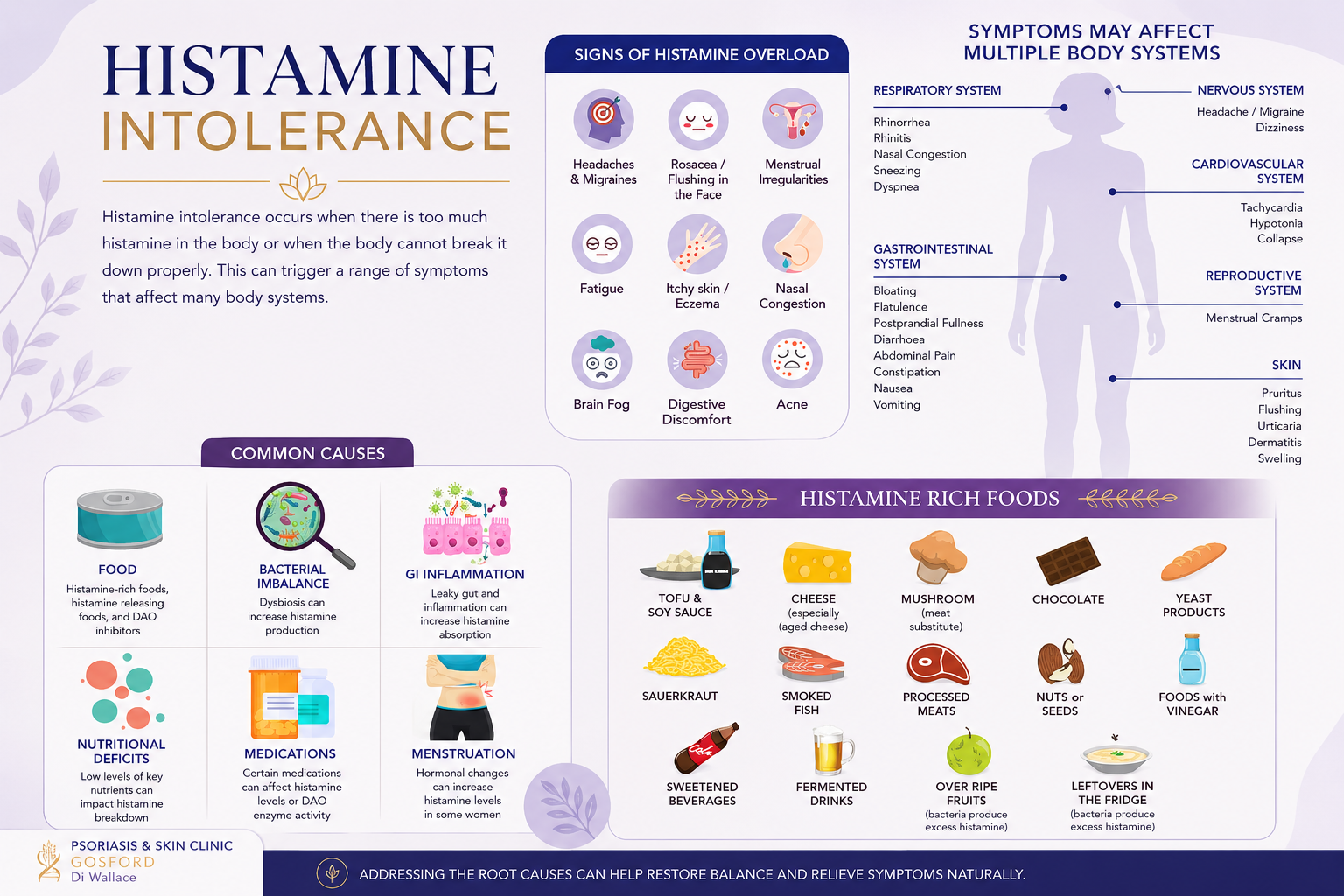
Which foods are high in histamine?
Histamine levels in food can vary considerably depending on freshness, processing, fermentation, ageing and storage.
Foods commonly associated with higher histamine exposure include:
-
Aged cheeses
Sauerkraut and other fermented vegetables
Soy sauce
Miso and other fermented soy products
Vinegar-containing foods
Fermented drinks
-
Salami
Pepperoni
Cured meats
Smoked meats
Other aged or processed meats
-
Histamine can increase in fish when it is not handled, chilled or stored appropriately. Freshness is therefore particularly important.
-
Alcohol, particularly wine and fermented alcoholic beverages, can be problematic for some people.
-
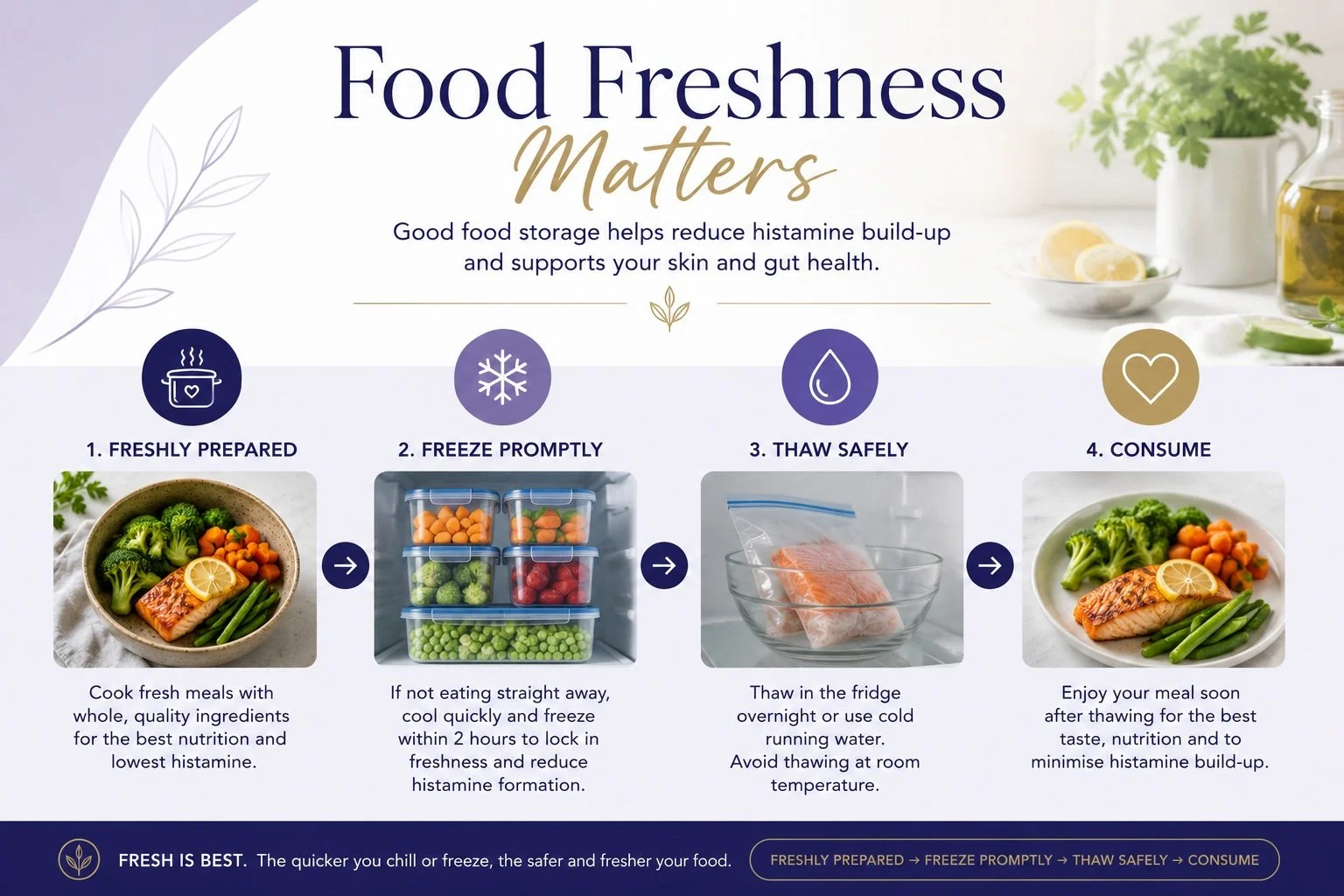
One of the interesting aspects of histamine is that storage matters.
Histamine can increase in some foods as they are stored, particularly when temperature control is inadequate. For this reason, some people find that freshly prepared food is better tolerated than food that has been sitting in the refrigerator for several days.
A low-histamine diet
A low-histamine diet can be useful as an investigative tool for some people who experience a pattern of symptoms that may be related to histamine.
However, I don't recommend simply removing a long list of foods indefinitely.
There is considerable variation between published low-histamine food lists, and the actual histamine content of foods can vary substantially. Some foods frequently labelled as "histamine liberators" do not have strong evidence supporting their exclusion.
Instead, I prefer a personalised and structured approach.
This may involve:
Identifying your symptoms and potential triggers.
Establishing a baseline.
Temporarily reducing foods that are most likely to be contributing.
Monitoring changes in your skin and other symptoms.
Carefully reintroducing foods.
Identifying your individual tolerance rather than unnecessarily restricting your diet.
This approach can help you discover what your body actually responds to, rather than simply following a long list of foods to avoid.
What foods can I eat on a low-histamine diet?
The emphasis is generally on fresh, minimally processed foods that you tolerate well.
Depending on the individual, this may include:
-
Freshly prepared chicken
Turkey
Lamb
Freshly prepared fish, where appropriate
-
Lifestyle and environmental factors can aggravate existing rosacea symptoms.
Carrots
Zucchini
Cucumber
Pumpkin
Cauliflower
Lettuce
Kale
Other fresh vegetables that you tolerate
-
Apples
Pears
Grapes
Some berries
Other fresh fruit according to individual tolerance
-
Rice
Oats
Quinoa
Other minimally processed grains that you tolerate
-
Extra virgin olive oil
Coconut oil
Other minimally processed fats according to individual tolerance
The important point is that there is no single low-histamine diet that works for everyone.
Food tolerance is highly individual, and overly restrictive diets can create their own nutritional problems.
Why does food freshness matter?
Why does food freshness matter?
One of the practical strategies I often discuss when histamine sensitivity is suspected is paying attention to how food is stored.
Histamine is produced by microorganisms during certain processes such as fermentation and spoilage. Consequently, histamine levels can increase in some foods over time.
For some people, this means: Freshly prepared, freeze promptly if not eating, thawing safely and consume quickly may be better tolerated than keeping cooked food refrigerated for several days.
This is particularly relevant to meat, fish and other foods in which histamine can accumulate during storage.
-
Diamine oxidase (DAO) is an enzyme involved in the breakdown of histamine in the digestive tract.
Reduced DAO activity has been proposed as one possible mechanism contributing to histamine intolerance.
There are DAO supplements available, and some studies have reported benefits for certain people. However, the evidence is still developing and questions remain around who is most likely to benefit and how effective supplementation is for different individuals.
I therefore don't believe that simply taking a DAO supplement is the answer for everyone.
The more useful question is: Why are you experiencing these symptoms, and what factors may be contributing to them?
-
Mast cells are immune cells found throughout the body and are particularly abundant in the skin.
When mast cells are activated, they can release histamine and a number of other inflammatory mediators.
This is important because mast cell activation and histamine intolerance are not the same thing.
They are related concepts, but one should not automatically be diagnosed from the presence of the other.
If you experience recurrent flushing, hives, itching, digestive symptoms or reactions involving several body systems, it is important to consider other possible explanations and seek appropriate medical assessment.
-
Some people notice that their histamine-related symptoms change throughout their menstrual cycle.
There is emerging evidence that interactions between histamine, mast cells and sex hormones may be relevant for some individuals. However, this is an area where more research is needed.
If you notice that your:
Skin flares
Itching
Flushing
Headaches
Digestive symptoms
or other symptoms consistently change around your menstrual cycle, this is useful information to record and discuss as part of your overall health assessment.
-
This is an important question because there is currently no single blood test or laboratory test that can definitively diagnose histamine intolerance.
DAO blood testing is sometimes offered, but current evidence suggests that DAO measurements alone have limitations and should not be interpreted as a definitive diagnosis.
A practitioner will generally consider:
Your symptom pattern
Your relationship with food
Timing of symptoms
Digestive symptoms
Skin symptoms
Medications and supplements
Other medical conditions
Potential food allergies or other intolerances
Whether symptoms improve when suspected triggers are reduced
What happens when foods are carefully reintroduced
This broader picture is much more useful than relying on a single test.
-
If you have persistent:
Itching
Flushing
Hives
Digestive symptoms alongside skin symptoms
Headaches or migraines
Food-related reactions
it may be worthwhile exploring whether histamine is one of the factors contributing to your symptoms.
It doesn't necessarily mean that histamine is the cause.
But understanding your individual triggers can be an important part of managing a chronic skin condition.
Let's look at the bigger picture
If you would like to explore whether diet, histamine, digestive health, hormones, stress or other factors may be contributing to your skin condition, I can help you work through these possibilities and develop an individualised approach.
Contact me to arrange an initial consultation, in person at Gosford or via Telehealth.
How I approach histamine intolerance and skin health
At Psoriasis & Skin Clinic Gosford, I take a holistic, individualised approach to chronic skin conditions.
Rather than looking only at the appearance of your skin, I want to understand what may be happening underneath the symptoms.
I look at potential triggers including:
Diet
What you're eating, food sensitivities, meal patterns and potential histamine exposure.
Gut health
Digestive symptoms and how your digestive system may be interacting with your overall health.
Hormones
Changes in symptoms throughout the menstrual cycle or other hormonal changes.
Stress
Stress can influence inflammatory and immune pathways and can also contribute to skin flare-ups.
Lifestyle
Sleep, exercise, alcohol, environmental exposures and other lifestyle factors.
Your skin
The type, location, severity and pattern of your skin symptoms are all important.
I then work with you to develop a realistic, personalised plan rather than asking you to eliminate large numbers of foods indefinitely.
It doesn't necessarily mean that histamine is the cause.
But understanding your individual triggers can be an important part of managing a chronic skin condition.
Let's look at the bigger picture
If you would like to explore whether diet, histamine, digestive health, hormones, stress or other factors may be contributing to your skin condition, I can help you work through these possibilities and develop an individualised approach.
Contact me to arrange an initial consultation, in person at Gosford or via Telehealth.
Frequently Asked Questions
-
Histamine intolerance refers to difficulty breaking down or processing histamine from food and from within the body. When histamine levels become higher than an individual can tolerate, some people may experience symptoms such as headaches, flushing, digestive discomfort, itching, nasal symptoms or skin reactions. Histamine intolerance can be complex, and symptoms can overlap with other conditions, so individual assessment is important.
-
Histamine levels can increase in foods as they are fermented, aged, cured or stored for longer periods. Foods that may be problematic for some people include aged cheeses, cured and processed meats, fermented foods, alcohol, certain fish and foods that have been stored for an extended period.
Importantly, tolerance varies from person to person. A food that causes symptoms for one person may be well tolerated by another.
-
Demodex mites naturally live on human skin.Yes. Histamine is involved in the body’s immune and inflammatory responses and can contribute to symptoms such as itching, flushing, redness, hives and skin irritation in susceptible individuals. Some people with chronic skin conditions may also notice that particular foods or food-storage practices appear to influence their symptoms.
-
For some people, food freshness and storage practices can make a difference. Histamine can increase in certain foods during storage, particularly when foods are aged, fermented or not stored appropriately.
A practical approach is to prepare food fresh, freeze leftovers promptly if you are not going to eat them, thaw safely, and consume them soon after thawing. Keeping a food and symptom diary can also help identify individual patterns.
-
Identifying histamine-related symptoms can be challenging because they can overlap with many other food, digestive and inflammatory issues. Rather than simply removing large numbers of foods from your diet, it can be helpful to look at your individual symptoms, diet, food-storage practices and other potential contributing factors.
A personalised consultation can help you identify patterns and develop a practical approach that supports your skin and overall health without unnecessary dietary restriction.
-
If you experience ongoing or recurring symptoms such as flushing, headaches, hives, digestive problems, nasal congestion, itching or unexplained reactions to certain foods, it is worth discussing them with your healthcare practitioner. These symptoms can have many possible causes, so an appropriate assessment can help identify potential triggers and rule out other conditions.
Seek urgent medical attention if you develop signs of a severe allergic reaction, such as difficulty breathing, swelling of the lips, tongue or throat, dizziness, fainting or a rapid deterioration in symptoms.
If your symptoms are frequent, worsening, affecting your quality of life, or you are finding it difficult to identify food or environmental triggers, professional guidance can help you develop a safe and appropriate approach to managing your symptoms.
Ready to Take the Next Step?
If you’re experiencing symptoms that may be linked to histamine or food reactions, you don’t have to work through it alone.
A personalised consultation can help explore your symptoms, dietary patterns, possible triggers and overall health, so we can develop an individualised approach to support your skin and wellbeing.
Take the next step towards understanding your symptoms and identifying what may be contributing to them.
At The Psoriasis & Skin Clinic Central Coast, we take a personalised and evidence-informed approach to skin condition management, focusing on inflammation, skin barrier support, trigger reduction, and whole-body skin health.
✔ Initial 75-minute consultation*
✔ Online telehealth Australia-wide or in-person on the Central Coast
✔ Personalised treatment plan
✔ Ongoing support throughout your journey
References
Hakl, R. and Litzman, J. (2023). Histamine intolerance.Vnitrni lekarstvi, [online] 69(1), pp.37–40. doi:10.36290/vnl.2023.005.Comas-Basté, O., Sánchez-Pérez, S., Veciana-Nogués, M.T., Latorre-Moratalla, M. and Vidal-Carou, M.C. (2020). Histamine Intolerance: the Current State of the Art.Biomolecules, [online] 10(8), p.1181. doi:10.3390/biom10081181.Jackson, K., Busse, W., Gálvez-Martín, P., Terradillos, A. and Martínez-Puig, D. (2025). Evidence for Dietary Management of Histamine Intolerance. International Journal of Molecular Sciences, [online] 26(18), p.9198. doi:10.3390/ijms26189198.Sánchez-Pérez, S., Comas-Basté, O., Veciana-Nogués, M.T., Latorre-Moratalla, M.L. and Vidal-Carou, M.C. (2021). Low-Histamine Diets: Is the Exclusion of Foods Justified by Their Histamine Content? Nutrients, 13(5), p.1395. doi:10.3390/nu13051395.