Topical Steroid Withdrawal (TSW)
Di's approach builds on the clinical principles developed through her advanced training with Professor Tirant while integrating current evidence on nutrition, gut health, immune function and lifestyle medicine.
Understanding Topical Steroid Withdrawal
Topical steroid withdrawal (TSW) is a term used to describe a range of skin symptoms that can occur after reducing or stopping topical corticosteroids, particularly following prolonged or frequent use.
TSW is an evolving area of medical research. Although people have reported symptoms for many years, there is still uncertainty about exactly why TSW develops, how it should be diagnosed and how long recovery may take.
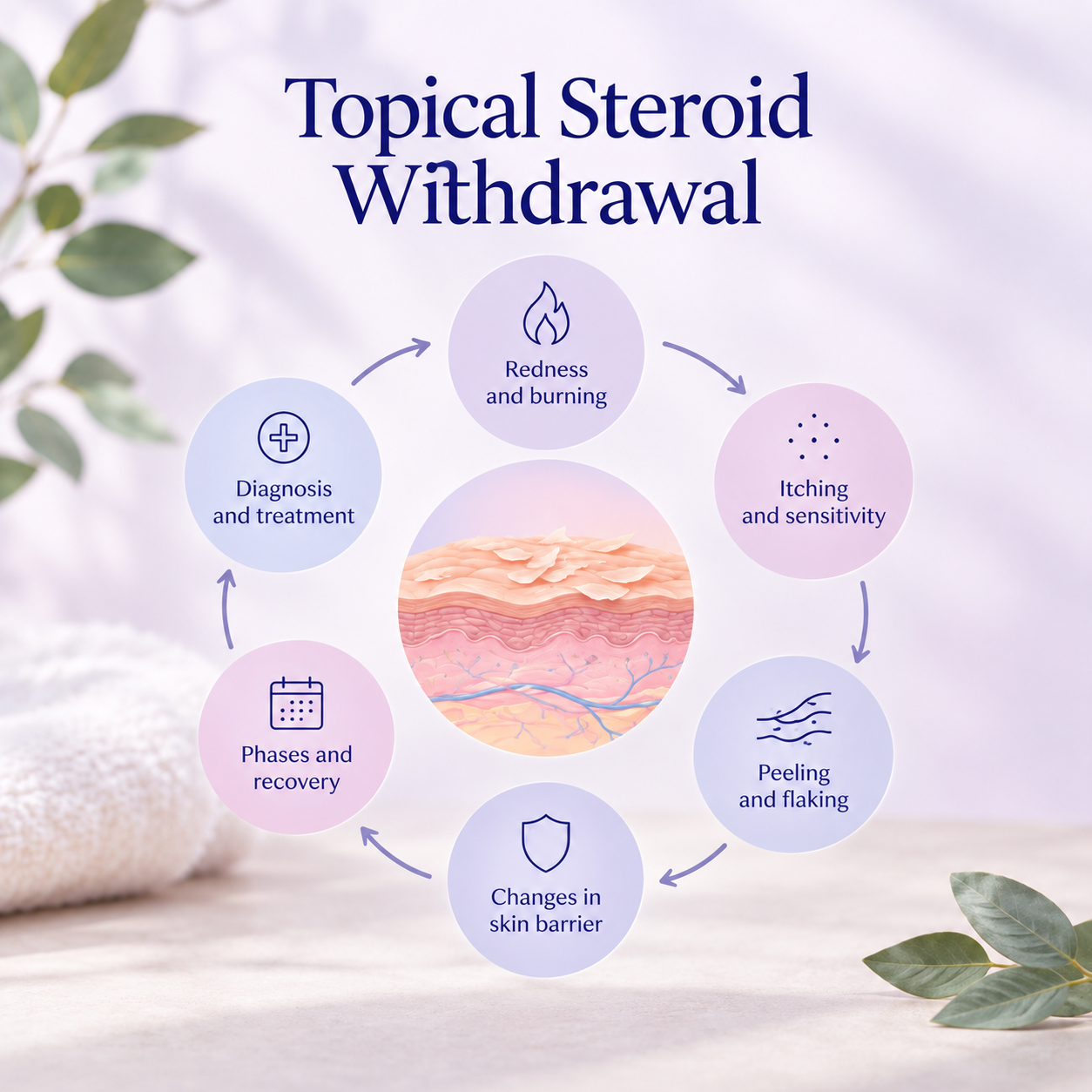
For some people, the skin changes following withdrawal can be very different from their original skin condition. Symptoms may include intense redness, burning, itching, sensitivity, swelling, peeling, oozing and changes in skin texture.
Importantly, not every flare after stopping a topical corticosteroid represents TSW. An underlying condition such as eczema, allergic contact dermatitis, infection or another inflammatory skin disorder may also be involved.
My approach is to look carefully at the whole picture rather than assuming that every change following topical steroid use has a single explanation.
What Is Topical Steroid Withdrawal?
Topical corticosteroids reduce inflammation in the skin and can be very effective when appropriately prescribed and used.
With prolonged or frequent use, however, the skin can undergo changes. When corticosteroid treatment is reduced or stopped, some people experience a significant rebound in symptoms.
The exact mechanisms of TSW are not yet fully understood. Research has proposed several interacting factors, including changes in local steroid signalling, blood-vessel regulation, skin-barrier function, immune activity and inflammatory pathways.
TSW is sometimes described using the terms topical steroid withdrawal syndrome, topical steroid addiction, red skin syndrome or red skin syndrome-like reactions. These terms are not necessarily interchangeable, and terminology remains an area of discussion within the medical literature.
Common Symptoms
Symptoms can vary considerably from person to person.
· intense redness
· burning or stinging
· itching
· increased skin sensitivity
· warmth
· swelling or oedema
· skin peeling or flaking
· dryness and cracking
· oozing or weeping
· changes in skin texture
· increased sensitivity to products that were previously tolerated
· sleep disturbance caused by itching or discomfort
The 2025 review literature describes burning, itching, redness, peeling and significant discomfort among commonly reported features.
Some people also describe symptoms that extend beyond the area where corticosteroids were originally applied.
Is It More Than Skin Deep?
Living with persistent burning, itching, visible redness and disrupted sleep can have a considerable effect on everyday life.
People experiencing significant skin symptoms may find that sleep, work, exercise, relationships and social activities are affected. The uncertainty surrounding TSW can also be frustrating, particularly when symptoms do not behave like the original skin condition.
This is why I believe it is important to consider more than the appearance of the skin.
The skin is an active organ involved in skin barrier protection, immune signalling, temperature regulation and communication with the outside environment. Supporting skin health therefore involves considering the factors that may be influencing the skin as a whole.
Why Does TSW Develop?
There is no single explanation that has been established for TSW.
Research suggests that several processes may interact.
-
Topical corticosteroids can influence blood-vessel activity within the skin. Following withdrawal, rebound vasodilation may contribute to increased redness, warmth and burning.
-
Prolonged corticosteroid exposure can affect skin structure and barrier function. When the barrier is compromised, the skin can lose water more readily and become more vulnerable to irritants and environmental exposure. Understand more about the skin barrier.
-
The skin is capable of producing and responding to glucocorticoids locally. Research has proposed that prolonged exposure to topical corticosteroids may alter this local signalling system.
-
Corticosteroids suppress inflammatory activity. When they are withdrawn, inflammatory pathways may become more active again, potentially contributing to the symptoms experienced by some people.
These mechanisms are still being investigated and should be regarded as proposed explanations rather than a complete explanation for every case of TSW.
Progression Towards Health
Recovery from TSW does not necessarily follow a predictable timetable.
Some people describe periods of intense redness, burning and oozing followed by phases of dryness, flaking and changes in skin texture. Others experience symptoms that fluctuate, with periods of improvement followed by setbacks.
The published literature has proposed different phases of withdrawal, but these should not be interpreted as a guaranteed sequence that everyone will experience.
As the skin barrier gradually improves, people may notice:
· less intense redness
· reduced burning or stinging
· less itching
· improved tolerance of gentle skincare
· reduced sensitivity
· less oozing
· improved moisture retention
· gradual changes in skin texture
Recovery is individual, and improvement may not be linear.
TSW is Different for Everyone
There is no single TSW experience.
Symptoms may depend on factors such as:
· the strength of the topical corticosteroid
· how frequently it was used
· how long it was used
· where it was applied
· whether the skin barrier was already damaged
· the original skin condition
· other topical products being used
· environmental factors
· individual immune and inflammatory responses
The current research base is still relatively small, and there is no universally accepted diagnostic test for TSW. A 2026 modified Delphi study has proposed preliminary diagnostic criteria for the erythemato-oedematous subtype, highlighting the continuing effort to establish clearer clinical definitions.
The Immune System and Cortisol Influence
The immune system plays an important role in skin health.
Our skin is constantly monitoring the environment around us. Immune cells within the skin communicate with surrounding cells and respond to physical, chemical and microbial signals.
Corticosteroids influence this inflammatory network by reducing inflammatory signalling. This is one reason they can be so effective for inflammatory skin conditions.
The body also has its own glucocorticoid system. Cortisol is produced primarily by the adrenal glands and is regulated through the hypothalamic–pituitary–adrenal (HPA) axis. The skin also has local steroidogenic pathways.
It is important to distinguish these systems.
TSW should not simply be described as the adrenal glands “stopping” or “running out of cortisol”. Systemic suppression of the HPA axis is a separate potential adverse effect of corticosteroid exposure and requires medical assessment when suspected.
Research into TSW is investigating how prolonged topical corticosteroid exposure may alter local steroid signalling within the skin, alongside changes in immune and inflammatory pathways.

The Gut–Skin Connection
Leaky Gut, Dysbiosis, the Skin Barrier and Immune Function
The skin does not function in isolation.
The gut and skin are both major interfaces between the body and the outside environment, and research is increasingly investigating communication between them through what is known as the gut–skin axis.
This involves interactions between the gut microbiome, skin microbiome, intestinal barrier, skin barrier and immune system.
When people use the term “leaky skin”, they are generally referring to impaired skin-barrier function. A compromised barrier can increase transepidermal water loss and make the skin more vulnerable to irritants and environmental exposure.
Similarly, “leaky gut” is a commonly used term for changes in intestinal permeability. In scientific literature, this is generally discussed as altered or impaired intestinal barrier function.
Research into atopic dermatitis suggests that gut microbial changes, intestinal barrier function, skin-barrier integrity and immune regulation may interact in complex ways. However, this research does not establish that leaky gut is the cause of TSW.
For this reason, I don't look at the skin in isolation.
I consider whether there are underlying factors that may be contributing to ongoing skin dysfunction, while recognising that every person has a different combination of influences.
What Can Make Symptoms Worse?
A number of factors may aggravate already sensitive skin.
· excessive heat
· sweating
· friction
· harsh cleansers
· fragranced products
· unnecessary changes to skincare
· very hot showers
· scratching
· stress and poor sleep
· environmental irritants
· infections
· individual dietary or lifestyle triggers
Not every factor affects every person.
Keeping a simple record of symptoms, products, environmental exposures and other changes can sometimes help identify patterns.
My Treatment Philosophy
My approach is individualised and focused on understanding the whole person rather than treating the appearance of the skin alone.
I first want to understand:
What has happened to the skin?
What was the original skin condition?
What topical treatments have been used?
How has the skin changed over time?
What symptoms are occurring now?
What factors may be contributing to ongoing inflammation or impaired barrier function?
From there, I can develop a personalised skin-health plan focused on supporting the skin barrier, identifying relevant triggers and addressing the wider factors that may be contributing to ongoing symptoms.
Where medical assessment is required, I believe this should form part of appropriate care rather than being avoided.
Frequently Asked Questions
Disclaimer
The information on this page is provided for general educational purposes and is not intended to diagnose, treat or replace individual medical advice.
Topical corticosteroids are established medical treatments for a range of inflammatory skin conditions and can be appropriate and effective when prescribed and used correctly.
If you are concerned about topical steroid withdrawal, do not change or stop prescribed medication without discussing this with an appropriately qualified healthcare professional.
Individual assessment is important because symptoms associated with TSW can overlap with eczema, allergic contact dermatitis, infection, rosacea and other skin conditions.
-
No. TSW and eczema can look very similar, and an eczema flare can occur after reducing treatment. Careful assessment is therefore important.
-
No. TSW and eczema can look very similar, and an eczema flare can occur after reducing treatment. Careful assessment is therefore important.
-
There is no reliable timetable. Recovery varies considerably between individuals, and symptoms may improve gradually with periods of fluctuation.
-
There is currently no single blood test that confirms TSW. Diagnosis is primarily clinical and involves considering the history of corticosteroid use, the pattern of symptoms and other possible explanations.
-
This is an individual medical decision. If you are currently using prescribed corticosteroids, discuss changes to treatment with your doctor or prescribing clinician rather than stopping medication solely because you are concerned about TSW.
-
Diet may be relevant to overall health and may be worth considering as part of an individualised assessment. However, there is no single TSW diet, and dietary changes should not be presented as a proven treatment for TSW.
-
Research into the gut–skin axis suggests that gut microbiota, intestinal barrier function, immune regulation and skin health can interact. Much of the evidence relates to atopic dermatitis and other inflammatory skin conditions, rather than TSW specifically.
When to Seek Medical Attention
Seek medical assessment if you develop:
Severe or rapidly changing symptoms should not automatically be attributed to TSW.
rapidly worsening skin symptoms
significant swelling
extensive oozing or crusting
increasing pain
fever or feeling unwell
signs of infection
eye involvement
facial swelling
difficulty breathing
symptoms suggesting a significant allergic reaction
symptoms of possible adrenal insufficiency or other systemic illness
Ready to Take the Next Step?

If you've been a skin condition and are looking for an evidence-informed, personalised approach that considers your skin, gut health, nutrition, lifestyle and overall wellbeing, I'd love to help.
✔ Initial 75-minute consultation*
✔ Telehealth Australia-wide or in-person on the Central Coast
✔ Personalised treatment plan
✔ Ongoing support throughout your journey
Supporting Patients Across the Central Coast
Patients commonly attend the clinic from:
Gosford
Erina
Terrigal
Woy Woy
Avoca Beach
Saratoga
Umina
Bateau Bay
Tuggerah
Wyong
Ettalong
Point Clare
Telehealth consultations may also be available Australia-wide.
References
1.	1. Maskey AR, Sasaki A, Sargen M, Kennedy M, Tiwari RK, Geliebter J, Safai B, Li X-M. (2025). Breaking the cycle: a comprehensive exploration of topical steroid addiction and withdrawal. Frontiers in Allergy, 6:1547923.
2.	2. Tan SY, Chandran NS, Choi EC-E. (2021). Steroid Phobia: Is There a Basis? A Review of Topical Steroid Safety, Addiction and Withdrawal. Clinical Drug Investigation, 41:835–842.
3.	3. Hsu C, Guo L, Adams D, et al. (2026). Topical steroid withdrawal syndrome: developing diagnostic criteria through a modified Delphi method. British Journal of Dermatology, 194(4):768–778.
4.	4. Choi H, Orbe M, Esam S, Parker J. (2026). An Updated Systematic Review of Topical Corticosteroid Withdrawal (TCSW): Steroid Addiction or Adverse Drug Effect? Cureus, 18(4):e107365.
5.	5. Petersen EMB, Skov L, Thyssen JP, Jensen P. (2019). Role of the Gut Microbiota in Atopic Dermatitis: A Systematic Review. Acta Dermato-Venereologica, 99(1):5–11.
6.	6. Peng R, Huang X, Bao Y, Luo G, Zeng J, Tang L. (2026). Atopic dermatitis and the gut-skin axis: a review from dysbiosis to novel targeted therapeutic strategies. Frontiers in Immunology, 17:1895580.