Rosacea Treatment Gosford | The Rosacea & Skin Clinic Central Coast
Di's approach builds on the clinical principles developed through her advanced training with Professor Tirant while integrating current evidence on nutrition, gut health, immune function and lifestyle medicine.
Rosacea is a chronic inflammatory skin condition that commonly affects the central face, causing persistent redness, flushing, visible blood vessels, skin sensitivity, burning sensations, and acne-like bumps. Some people may also develop eye irritation known as ocular rosacea.
Rosacea often follows a pattern of flare-ups and remissions and is most common between the ages of 30 and 60 years. Although rosacea is more frequently diagnosed in fair-skinned individuals of Northern European background, it can affect all skin types and ethnicities.
At The Psoriasis & Skin Clinic Central Coast, we provide evidence-informed rosacea treatment in Gosford focused on reducing inflammation, calming skin sensitivity, identifying triggers, and supporting long-term skin health.
Modern research shows rosacea is not simply a cosmetic skin problem. It involves complex interactions between the immune system, nervous system, blood vessels, skin barrier function, microbiome health, and inflammatory pathways.
What Is Rosacea?
Rosacea is a chronic inflammatory skin disorder involving neurovascular dysregulation, immune system activation, and increased skin sensitivity.
Researchers now understand that rosacea develops through multiple overlapping pathways involving:
Overactive innate immune responses
Neurogenic inflammation
Blood vessel instability
Skin barrier dysfunction
Alterations in the skin microbiome
Gut-skin axis dysfunction
Environmental and lifestyle triggers
One of the hallmark features of rosacea is abnormal inflammatory signalling involving cathelicidins, Toll-like receptor 2 (TLR2), inflammasomes, and neurovascular hypersensitivity.
These pathways contribute to facial redness, flushing, inflammation, burning sensations, and visible blood vessels.
Common Rosacea Symptoms
Rosacea most commonly affects the:
Cheeks
Nose
Chin
Forehead
Symptoms often fluctuate between periods of improvement and flare-ups.
Common rosacea symptoms include:
Persistent facial redness
Easy flushing or blushing
Burning or stinging sensations
Visible blood vessels (telangiectasia)
Skin sensitivity
Dry or reactive skin
Papules and pustules (“acne rosacea”)
Swelling or inflammation
Eye irritation or dryness
Thickened skin in advanced cases
Some patients experience mild redness only, while others develop more persistent inflammation and vascular changes over time.
What Causes Rosacea?
Rosacea is not caused by one isolated mechanism.
Instead, multiple inflammatory pathways interact simultaneously.
Current research suggests rosacea involves:
Genetic predisposition
Immune hypersensitivity
Neurovascular dysfunction
Skin microbiome imbalance
Gut-skin axis dysfunction
Environmental triggers
Chronic inflammation
These pathways may contribute to:
Increased skin reactivity
Blood vessel dilation
Flushing
Cytokine activation
Persistent inflammation
Skin barrier impairment
-
Rosacea is not caused by one isolated mechanism.
Instead, multiple inflammatory pathways interact simultaneously.
Current research suggests rosacea involves:
Genetic predisposition
Immune hypersensitivity
Neurovascular dysfunction
Skin microbiome imbalance
Gut-skin axis dysfunction
Environmental triggers
Chronic inflammation
These pathways may contribute to:
Increased skin reactivity
Blood vessel dilation
Flushing
Cytokine activation
Persistent inflammation
Skin barrier impairment
-
Research shows that rosacea involves activation of both the immune system and nervous system.
In rosacea-prone skin, the innate immune system becomes overly reactive to triggers such as:
Heat
UV exposure
Stress
Microbial changes
Harsh skincare
Environmental irritants
This immune activation stimulates inflammatory pathways involving:
Toll-Like Receptor 2 (TLR2)
Cathelicidins (LL-37)
Inflammasomes
Cytokines
Mast cells
These inflammatory mediators may contribute to:
Facial redness
Flushing
Burning sensations
Papules and pustules
Blood vessel dilation
Skin sensitivity
Rosacea is increasingly recognised as a chronic inflammatory disorder involving both immune and neurovascular dysregulation.
-
Rosacea can significantly affect confidence, self-esteem, social interactions, and emotional wellbeing.
Studies show that rosacea may negatively impact quality of life regardless of how severe the visible symptoms appear.
Common emotional effects include:
Embarrassment
Anxiety
Self-consciousness
Social withdrawal
Stress
Reduced confidence
Many people with facial redness feel their symptoms affect work, relationships, and everyday activities.
-
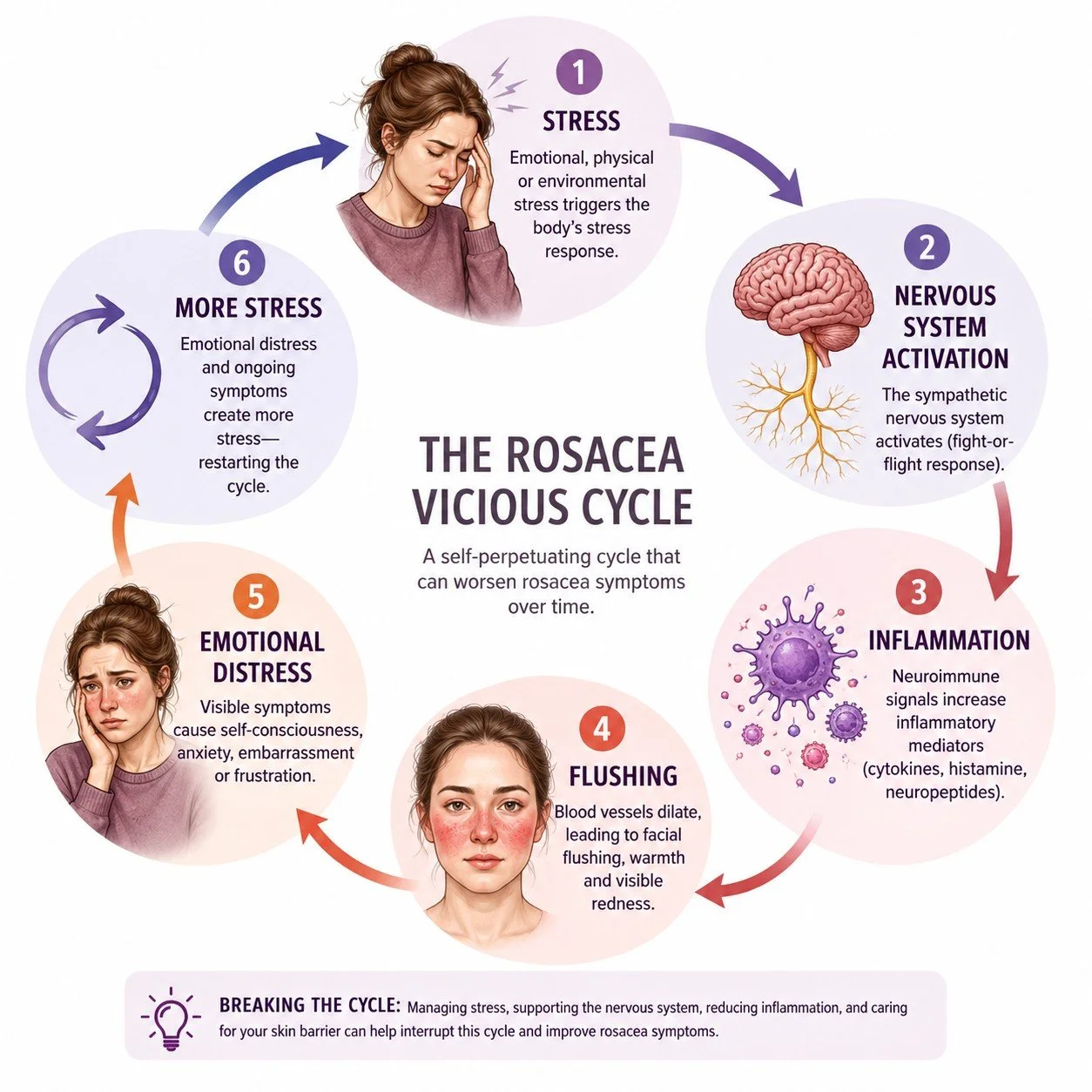
Stress can worsen rosacea through the brain–skin axis.
Psychological stress may:
Increase cortisol levels
Alter immune signalling
Trigger neurogenic inflammation
Worsen flushing
Influence gut function
Increase skin sensitivity
Stress may also alter the gut microbiome and inflammatory pathways, creating a cycle where stress and skin symptoms continuously amplify each other.
-
Emerging research highlights the important relationship between gut health and inflammatory skin conditions.
The gut–skin axis describes the communication between:
The gut microbiome
Immune system
Nervous system
Hormonal pathways
Skin barrier
Alterations in gut bacteria may contribute to systemic inflammation and increased skin reactivity.
Research has identified associations between rosacea and conditions such as:
Small intestinal bacterial overgrowth (SIBO)
Helicobacter pylori infection
Gut dysbiosis
Increased intestinal permeability (“leaky gut”)
The skin microbiome and gut microbiome both appear to influence inflammatory signalling in rosacea.
Types of Rosacea
Rosacea can present in several different forms.
Many patients experience overlapping features from multiple rosacea subtypes.
-
This subtype involves:
Persistent redness
Frequent flushing
Visible capillaries
Sensitive or reactive skin
-
Often referred to as “acne rosacea,” this subtype includes:
Red inflammatory bumps
Pustules
Facial redness
Sensitive skin
-
This form causes:
Skin thickening
Enlarged oil glands
Irregular skin texture
It most commonly affects the nose and may lead to rhinophyma.
-
Ocular rosacea affects the eyes and eyelids and may cause:
Dry or gritty eyes
Redness
Irritation
Watering
Light sensitivity
Rosacea Triggers
Rosacea flare-ups are often influenced by internal and external triggers.
-
These factors may initiate or amplify inflammatory pathways:
Genetic predisposition
Overactive immune responses
Neurovascular hypersensitivity
Temperature dysregulation
Hormonal influences
Skin barrier dysfunction
Demodex mite overgrowth
-
Lifestyle and environmental factors can aggravate existing rosacea symptoms.
Common rosacea triggers include:
Sun exposure
Heat and humidity
Wind and weather changes
Alcohol (especially red wine)
Spicy foods
Hot drinks
Histamine-rich foods
Emotional stress
Vigorous exercise
Harsh skincare products
Fragrances and exfoliants
Occupational heat or chemical exposure
Trigger patterns vary between individuals.
Rosacea Treatment Philosophy
At The Psoriasis & Skin Clinic Gosford, Central Coast, our treatment philosophy focuses on understanding the underlying inflammatory and trigger pathways contributing to rosacea.
Di's approach builds on the clinical principles developed through her advanced training with Professor Tirant while integrating current evidence on nutrition, gut health, immune function and lifestyle medicine.
Treatment goals may include:
Reducing redness and inflammation
Improving skin barrier function
Calming flushing and sensitivity
Identifying rosacea triggers
Supporting gut health
Managing stress and nervous system activation
Supporting microbiome balance
Improving skin comfort and confidence
Reducing flare frequency
Preventing progression
An integrative approach may include:
Clinical nutrition support
Anti-inflammatory strategies
Skin barrier repair
Trigger identification
Gut health support
Lifestyle modification
Practitioner-guided skincare
Early and consistent rosacea treatment may help improve long-term skin stability and quality of life.
Frequently Asked Questions
-
Certain foods and beverages may activate neurovascular and inflammatory pathways in susceptible individuals.
Potential dietary triggers include:
Alcohol
Spicy foods
Hot drinks
Histamine-rich foods
Food triggers vary significantly between individuals.
-
Helicobacter pylori is a stomach bacterium associated with gastritis and ulcers.
Some research suggests H. pylori may contribute to rosacea through:
Increased nitric oxide production
Vascular changes
Oxidative stress
Immune activation
However, evidence remains mixed and not all rosacea patients have H. pylori.
-
Demodex mites naturally live on human skin.
Research has found increased Demodex densities in many people with rosacea.
Possible mechanisms include:
Physical irritation
Activation of immune receptors
Inflammatory signalling
Bacterial carriage
Demodex mites may contribute to inflammation in susceptible individuals, although rosacea is considered multifactorial.
-
Small intestinal bacterial overgrowth (SIBO) involves excessive bacteria within the small intestine.
Researchers believe SIBO may contribute to rosacea through:
Endotoxin production
Cytokine activation
Immune dysregulation
Increased intestinal permeability
Some studies have shown rosacea improvement after treating SIBO in selected patients.
Ready to Take the Next Step?
If you are struggling with facial redness, flushing, sensitive skin, acne rosacea, or chronic inflammation, professional support may help identify contributing triggers and improve skin stability.
At The Rosacea & Skin Clinic Central Coast, we take a personalised and evidence-informed approach to rosacea management, focusing on inflammation, skin barrier support, trigger reduction, and whole-body skin health.
✔ Initial 75-minute consultation*
✔ Online telehealth Australia-wide or in-person on the Central Coast
✔ Personalised treatment plan
✔ Ongoing support throughout your journey
References
Ryan, Bourkas, A.N., Mufti, A. and R. Gary Sibbald (2024). Rosacea: Pathogenesis and Therapeutic Correlates. Journal of Cutaneous Medicine and Surgery, 28(2), pp.178–189.
Sánchez-Pellicer, P., Eguren-Michelena, C., García-Gavín, J., Mar Llamas-Velasco, Navarro-Moratalla, L., Núñez-Delegido, E., Agüera-Santos, J. and Navarro-López, V. (2024). Rosacea, Microbiome and Probiotics: The Gut–Skin Axis. Frontiers in Microbiology.
www.rosacea.org. (n.d.). Grading System for Rosacea | Rosacea.org. [online] Available at: https://www.rosacea.org/physicians/grading-system-for-rosacea/view-online.