Meet Substance P: The Neuropeptide Behind Some of Your Most Frustrating Skin Symptoms
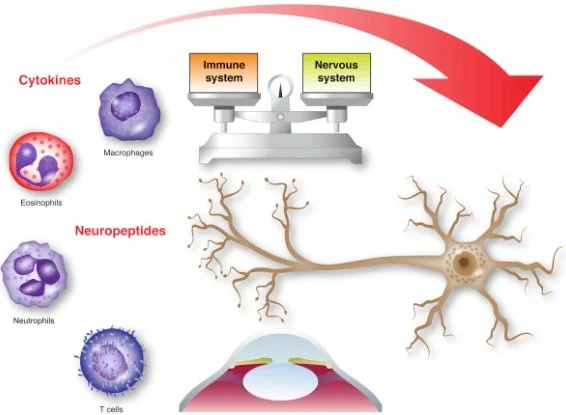
If you’ve ever wondered why stress makes your skin flare, why itching triggers more itching, or why wounds heal slower in nerve-damaged skin — the answer often comes back to one molecule: Substance P (SP).
What Is Substance P?
SP is a neuropeptide stored in sensory nerves. When skin is irritated, stressed, or injured, nerves release SP into the surrounding tissue.
SP Can Trigger:
Inflammation
SP activates immune cells
It increases TNF-α, IL-1, IL-6
It releases histamine from mast cells
Vasodilation (Redness + Heat)
SP widens blood vessels and increases blood flow.
Immune Activation
SP boosts T cell activity and antibody production.
Itching & Pain Sensitisation
SP amplifies itch pathways, especially in chronic eczema, psoriasis, or neuropathic conditions.
SP Is Implicated in Many Conditions
Atopic dermatitis
Psoriasis
Chronic itching
Stress-related flares
Hidradenitis suppurativa
Neurogenic rosacea
Chronic wounds
Reducing SP Activity Can Help
Emerging research focuses on:
Neurokinin-1 receptor (NK1R) blockers
Stress management
Anti-inflammatory treatments
Phototherapy
Topicals that reduce nerve activation
Why This Matters
SP helps explain why psychological stress leads to physical skin changes. The brain–skin axis is real, and SP is one of its main messengers.
Reference:
Ansel, J.C., Kaynard, A.H., Armstrong, C.A., Olerud, J., Bunnett, N. and Payan, D. (1996). Skin-Nervous System Interactions. Journal of Investigative Dermatology, [online] 106(1), pp.198–204. doi:https://doi.org/10.1111/1523-1747.ep12330326.