Acne Treatment Gosford | The Psoriasis & Skin Clinic Central Coast
Helping patients understand the underlying causes of chronic skin conditions through personalised, evidence-informed care.
Acne is one of the most common chronic inflammatory skin conditions affecting both teenagers and adults. While often dismissed as a normal part of adolescence, acne can significantly impact confidence, emotional wellbeing, skin health, and quality of life.
At The Psoriasis & Skin Clinic on the Central Coast, acne treatment focuses on identifying the underlying inflammatory, hormonal, immune, and gut-related drivers contributing to acne breakouts and chronic skin inflammation.
Research now shows acne is far more complex than blocked pores or poor hygiene. Acne vulgaris is increasingly recognised as an inflammatory immune condition involving the gut-skin axis, microbiome imbalances, hormones, genetics, and lifestyle factors.
The Australian Journal of General Practice reports acne affects:
Approximately 93.3% of Australians aged 16–18 years
Up to 85% of people aged 12–24 years
64% of adults aged 20–29 years
43% of adults aged 30–39 years
Many patients seeking acne treatment in Gosford and across the Central Coast are also struggling with inflammation, digestive symptoms, hormonal fluctuations, stress, poor sleep, and skin barrier dysfunction.
-
Acne vulgaris is a chronic inflammatory skin disorder involving the pilosebaceous unit, which includes the hair follicle and sebaceous (oil) gland.
Acne develops when several factors interact together, including:
Increased oil (sebum) production
Abnormal skin cell shedding
Inflammation
Hormonal influences
Microbiome imbalances
Immune system activation
Acne can vary from mild congestion and blackheads through to painful cystic acne and widespread inflammatory lesions.
While acne commonly develops during puberty, adult acne is becoming increasingly common, particularly in women experiencing stress, hormonal fluctuations, digestive dysfunction, and chronic inflammation.
At my acne clinic in Gosford, many patients are surprised to learn that gut health, stress, diet, immune function, and inflammation may all contribute to persistent acne breakouts.
-
Acne most commonly develops on the:
Face
Back
Chest
Shoulders
Jawline
Neck
Adult hormonal acne frequently appears around the jawline, chin, and lower face.
-
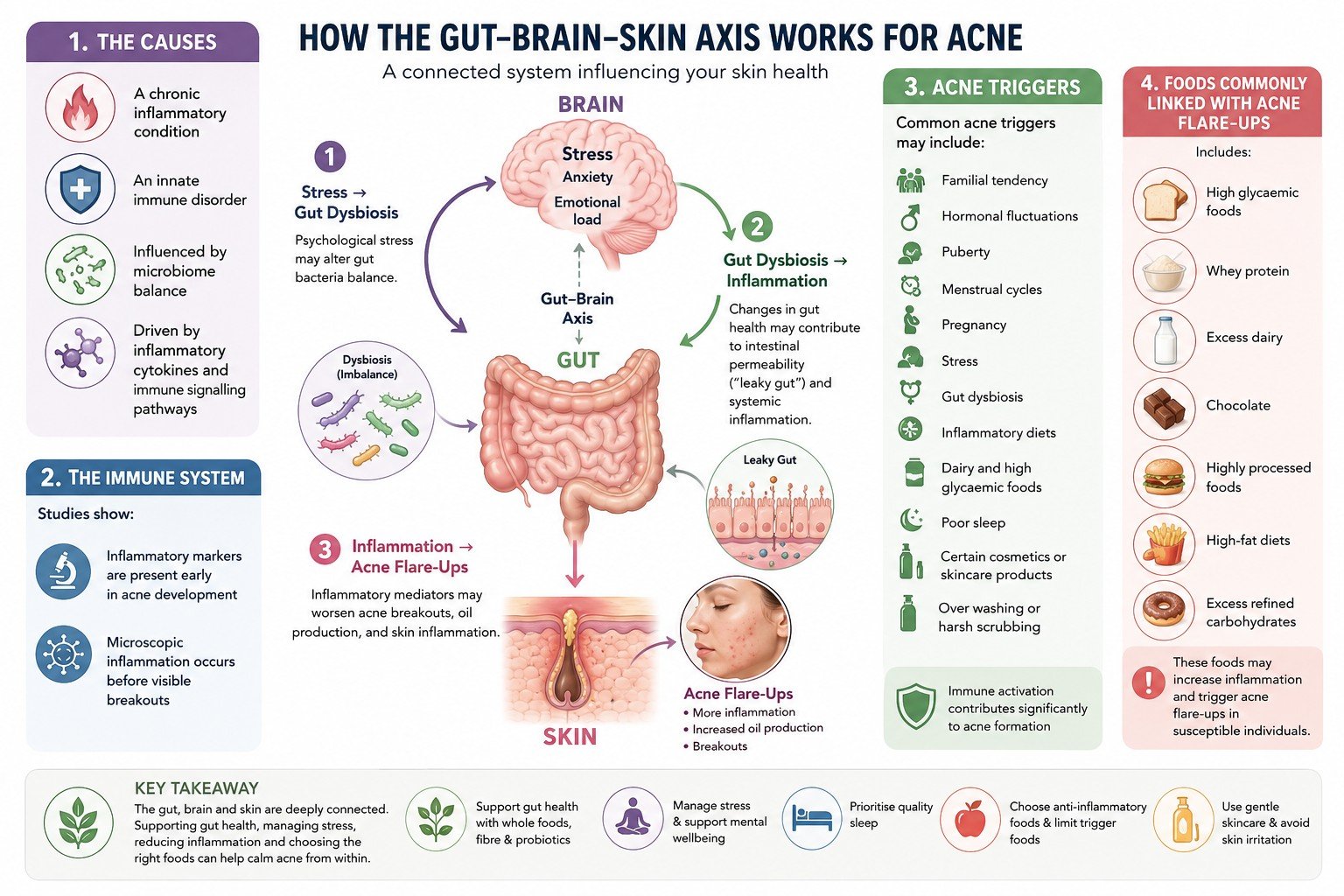
Acne is now understood to be:
A chronic inflammatory condition
An innate immune disorder
Influenced by microbiome balance
Driven by inflammatory cytokines and immune signalling pathways
Acne is NOT simply caused by:
Poor hygiene
Dirty skin
Excess bacteria alone
Blocked pores only
At my Central Coast acne clinic, many patients present with multiple contributing factors occurring simultaneously.
-
Research now shows acne is fundamentally an inflammatory immune condition.
Traditionally, acne was believed to develop in the following order:
Excess oil production
Blocked pores
Bacterial overgrowth
Inflammation
However, newer research demonstrates that inflammation may actually begin before visible acne lesions appear.
Studies show:
Inflammatory markers are present early in acne development
Microscopic inflammation occurs before visible breakouts
Immune activation contributes significantly to acne formation
This helps explain why some individuals continue experiencing chronic acne despite using topical skincare products alone.
As a naturopath focusing on inflammatory skin conditions in Gosford, I frequently observe how immune dysfunction, stress, digestive issues, and systemic inflammation may contribute to acne severity.
-
Acne can significantly impact emotional wellbeing, self-confidence, social interactions, and mental health.
Research into the gut-brain-skin axis now shows psychological stress, gut dysbiosis, and skin inflammation are closely interconnected.
-
Emerging research highlights the important role the gut microbiome may play in acne development.
The gut-skin axis describes the communication pathway between the digestive system, immune system, and skin.
Gut dysbiosis may contribute to:
Increased gut permeability
Systemic inflammation
Immune dysregulation
Increased sebum production
Altered keratinisation
Skin barrier dysfunction
Research suggests acne patients may have reduced levels of beneficial butyrate-producing bacteria, which are important for maintaining healthy gut and skin barrier function.
At my Gosford skin clinic, many acne patients report digestive symptoms including bloating, food intolerances, constipation, reflux, or irregular bowel habits alongside chronic skin inflammation.
Acne Treatment Philosophy
At The Psoriasis & Skin Clinic Gosford, Central Coast, our treatment My approach to acne treatment in Gosford focuses on supporting the skin while also identifying the underlying factors contributing to chronic inflammation and breakouts.
Treatment support may include:
Dietary and nutritional assessment
Gut health support
Hormonal support
Skin barrier repair
Stress and nervous system support
Inflammatory load reduction
Lifestyle modifications
Nutritional supplementation
Immune and microbiome support
Many patients seek natural acne treatment on the Central Coast after struggling with persistent breakouts, adult acne, scarring, hormonal acne, or recurring inflammation.
Potential Benefits of Acne Treatment
Patients may experience improvements in:
Reduced breakouts
Reduced inflammation
Improved skin texture
Reduced congestion
Improved skin healing
Reduced risk of scarring
Improved confidence and wellbeing
Healthier skin barrier function
Frequently Asked Questions
-
A Western-style diet high in sugar, refined carbohydrates, dairy, processed foods, and saturated fats is strongly associated with acne.
Foods commonly linked with acne flare-ups include:
High glycaemic foods
Whey protein
Excess dairy
Chocolate
Highly processed foods
High-fat diets
Excess refined carbohydrates
These foods may stimulate the mTORC1 pathway, increasing oil production and inflammation.
-
An anti-inflammatory, nutrient-dense diet may help support skin health and reduce inflammation.
Dietary support may include:
Low glycaemic foods
Plant-focused meals
Increased vegetables and fibre
Omega-3 rich foods
Reducing processed foods
Reducing excess dairy intake
Some patients may also benefit from probiotics, prebiotics, and targeted nutritional support.
-
Early intervention and appropriate acne management may help reduce the risk of scarring and post-inflammatory pigmentation.
Reducing inflammation early is often important for preventing long-term skin damage.
-
Many acne products primarily target surface oil or bacteria; however, acne is a deeper inflammatory condition involving hormones, immunity, inflammation, and gut health.
A whole-body approach is often required when acne becomes persistent or recurrent.
-
Adult acne may be influenced by:
Hormonal fluctuations
Stress
Poor sleep
Gut health imbalances
Skin barrier dysfunction
Chronic inflammation
Certain skincare or cosmetic products
Adult hormonal acne is increasingly common, particularly in women.
-
Rosacea is commonly identified by facial redness and flushing and does not usually present with blackheads or whiteheads (comedones).
Acne commonly presents with:
Blackheads
Whiteheads
Papules
Pustules
Congestion
Inflammatory lesions
Acne may affect the face, chest, and back, while rosacea is usually concentrated on the central face.
-
Medical advice should be sought if:
Acne becomes painful, severe, or cystic
You are developing acne scarring or pigmentation
Your acne is worsening despite treatment
Breakouts are affecting your mental wellbeing or confidence
You develop deep nodules, abscesses, or widespread inflammation.
This information is educational only and is not intended to diagnose, treat or replace medical advice.
Always consult your healthcare practitioner regarding skin conditions, medications and medical concerns.
Supporting Acne Patients Across the Central Coast
Patients commonly attend the clinic from:
Gosford
Erina
Terrigal
Woy Woy
Avoca Beach
Saratoga
Umina
Bateau Bay
Tuggerah
Wyong
Ettalong
Point Clare
Telehealth consultations may also be available Australia-wide.
References
Dreno, B. et al. (2015). Understanding innate immunity and inflammation in acne: implications for management. Journal of the European Academy of Dermatology and Venereology.
Sanjita Konsam, R. et al. (2025). Exploring the relationship between Gut Dysbiosis and Acne Vulgaris in Adolescence and Young Adults. Journal of Ayurveda and Integrated Medical Sciences.
NHS. (2019). Overview – Acne.
Stanford Medicine 25. Acne and Rosacea Overview.